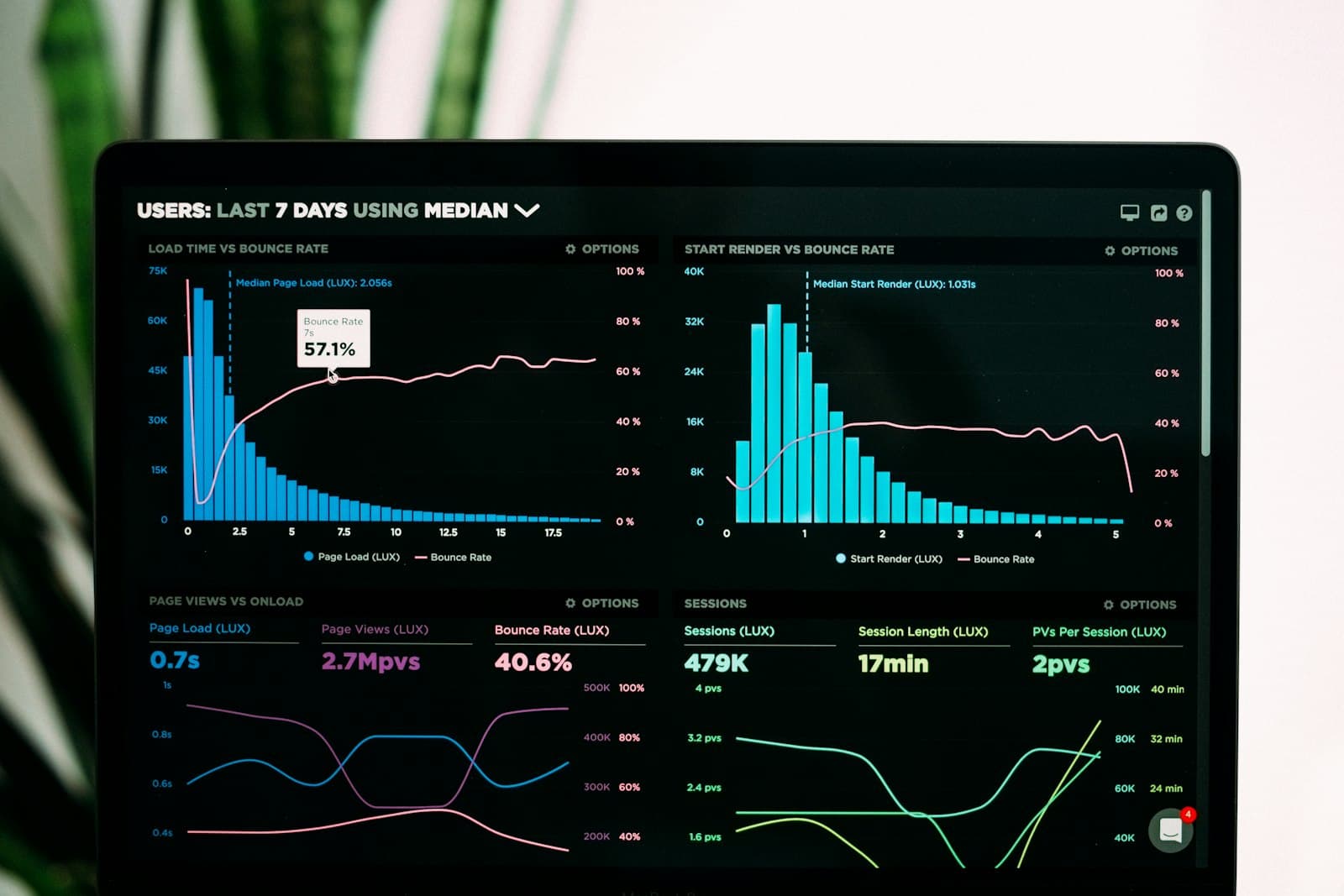
Conversational AI can answer business questions on demand. Does that mean dashboards are obsolete? After two years of running both side by side, the answer is more interesting than either side of the debate suggests.
We get this question on almost every kickoff call now: 'Should we even be building dashboards anymore? Won't AI just answer the questions directly?' The honest answer, after two years of running both side by side at clients, is that the question is poorly framed. Dashboards and conversational AI solve different problems. The companies that get the most leverage out of their data investments are the ones that figure out which problem each tool actually solves — and stop trying to replace one with the other.
This post is the long version of the answer we give on those calls. It walks through what dashboards do that conversational AI cannot replicate, what conversational AI does that dashboards cannot replicate, and where the boundary actually sits in 2026.
What dashboards still do uniquely well
Dashboards are not primarily a query interface. They are a shared frame of reference for an audience. A weekly sales pipeline dashboard is not really answering questions — it is providing the entire team with a common picture of the same numbers, viewed in the same way, at the same cadence. That shared frame is what allows the team to have a productive meeting on Monday morning without each person spending the first 20 minutes building their own version of the picture.
Things dashboards do that AI does not
- Provide a shared visual reference that an entire team interprets the same way
- Surface unexpected information the user wasn't thinking to ask about
- Establish a fixed cadence — weekly, monthly — that anchors organizational rituals
- Allow at-a-glance scanning across 10-20 metrics simultaneously
- Embed governance rules implicitly through curated views
- Let executives consume information in a meeting where there is no time to converse
What conversational AI does uniquely well
Conversational AI is best at the questions that don't fit on a dashboard — the ad-hoc, exploratory, often follow-up questions that arise in the middle of a discussion. 'What happened with that one big deal in the Pacific Northwest region?' is not a dashboard question. It is a conversation. The dashboard could in theory be extended to support every possible follow-up, but the cost is a 14-page dashboard that no one ever opens. The conversational interface absorbs the long tail of questions that dashboards were never going to answer cost-effectively.
The other place conversational AI wins decisively is for the audience that didn't have a dashboard at all. The CEO who never opened the BI tool. The board member who looks at the data twice a year. The new VP who hasn't been trained on the existing dashboards. For these users, the conversational interface is more accessible than even the best-designed dashboard, because there is nothing new to learn.
Where the boundary actually sits
After 18 months of deployments running both side by side, the boundary that has held up across clients is roughly: dashboards for the recurring 20 metrics every leadership team needs to see weekly, conversational AI for the long tail of follow-up questions those 20 metrics generate. The dashboards are the spine; the conversational interface is the connective tissue.
This boundary is not where the dashboard vendors are positioning themselves and not where the AI vendors are positioning themselves. Both sides have an incentive to overstate the scope of their tool. The truth is that mid-market companies will be running both for the foreseeable future, and the smart investment is in the infrastructure that supports both — a governed semantic model with named measures, owned definitions, and groundable metadata. That infrastructure is the same regardless of which surface you use to interrogate it.
How dashboards need to change
Dashboards do need to evolve. The version of the dashboard that survives the AI era is leaner, more opinionated, and more focused than the average dashboard we audit. The 60-tile cluttered dashboards that papered over the lack of conversational access are no longer doing useful work. The version that survives shows the 8-12 metrics that genuinely belong on a shared view, leaves the rest to the conversational interface, and is faster to render and easier to interpret.
The dashboard that survives the AI era
- 8-12 metrics on the primary view, not 60
- Each metric has a target, a comparison, and a one-line interpretive caption
- Drill paths are short — 1-2 levels, not 5
- Anything beyond the headline metrics is delegated to the conversational interface
- The dashboard loads in under 5 seconds even on a constrained device
- The semantic model behind it is the same one the AI agent grounds against
How conversational AI needs to be deployed
The companies that deploy conversational AI badly do it as a standalone replacement for the dashboard. The companies that deploy it well wire it directly into the dashboard — every visual has an 'ask a question about this' affordance, the conversational answers cite the same measures the dashboard uses, and the two interfaces feel like one product to the user. That integration is what makes the boundary between the two tools invisible to the executive consuming the information.
Anti-patterns on both sides
- Building yet another sprawling dashboard hoping it answers every question
- Deploying conversational AI without the shared dashboard the team uses every Monday
- Letting the AI agent answer questions the dashboard already shows clearly
- Building a dashboard for every possible AI follow-up question
- Running the AI agent against a different semantic model than the dashboard
- Pitching either tool as the death of the other
What good looks like
When both surfaces are deployed well, the leadership team starts every meeting from a shared dashboard view that everyone has already scanned. The conversation then dives into the questions that emerge from that view, answered live by the conversational interface in the room. The dashboard sets the frame; the AI handles the follow-up. The combination is materially faster than the dashboard-only world and materially more grounded than the AI-only world.
“Dashboards are for the questions you knew you'd ask. AI is for the ones you only discovered because the dashboard surfaced them.”
The one-line takeaway
Dashboards and conversational AI are not competing products — they cover different parts of the same decision surface. The companies that get the most value invest in the shared semantic layer that powers both, and use each tool for the job it does uniquely well.
Published February 8, 2026 · 10 min read